
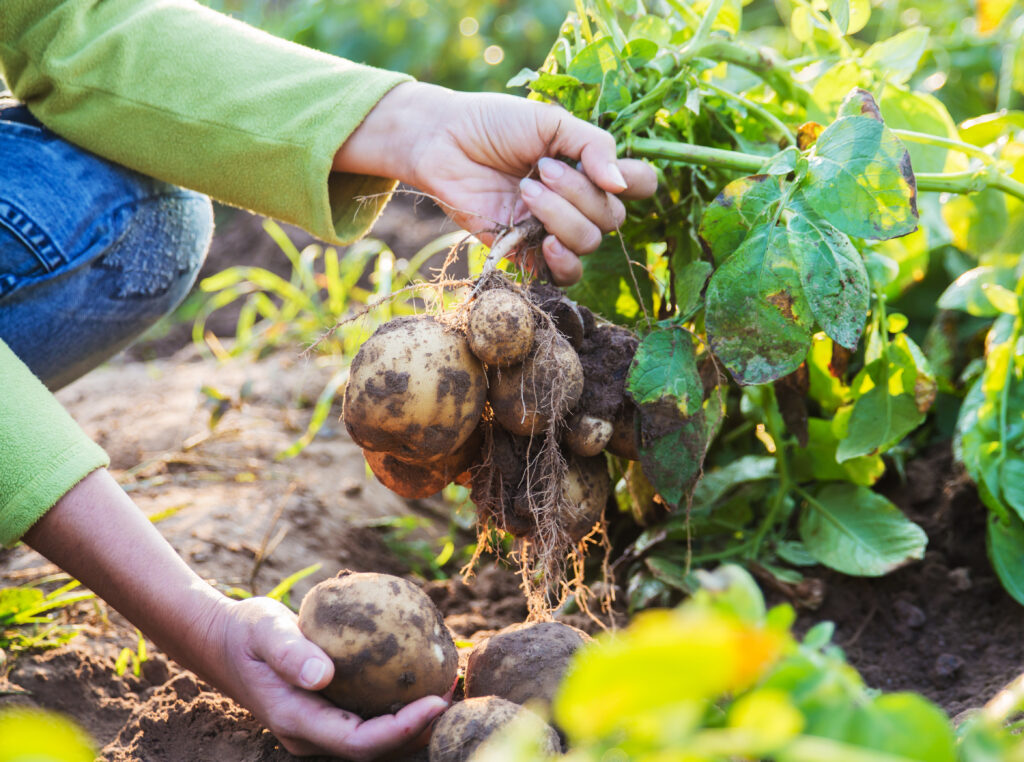
Field Vegetables
Field Vegetables will co-develop, demonstrate and evaluate BMPs, such as precision (4R) nutrient management and winter cover cropping, that will help reduce emissions and/or increase soil carbon in BC’s field vegetable sector.
Farmers can grow a wide variety of field vegetables in British Columbia, thanks to a moderate climate, fertile soils, and access to good water. The bulk of production takes place in the Lower Mainland. Other production areas include Vancouver Island and BC’s southern Interior. Relatively small amounts of production occur in the Kootenay, Cariboo, and northern regions of BC.
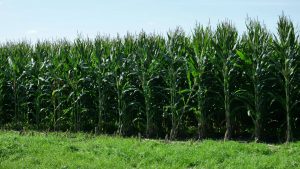
A wide variety of field vegetables are grown in British Columbia with potatoes, cole crops (such as broccoli, brussels sprouts, cabbage, and cauliflower), sweet corn, beans, cucurbits (such as pumpkins, squash, and zucchini), lettuce, carrots, and peas being produced in relatively large quantities.
Includes: Potatoes
Who is Involved?
- BC Potato & Vegetable Growers’ Association
- Delta Farmland and Wildlife Trust
What Practices are Being Developed & Researched?
- Winter cover crops
- 4R nutrient management
Resources
- Variety Trials for Cover Crops in Vegetables
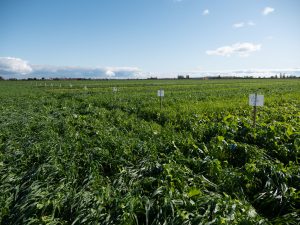
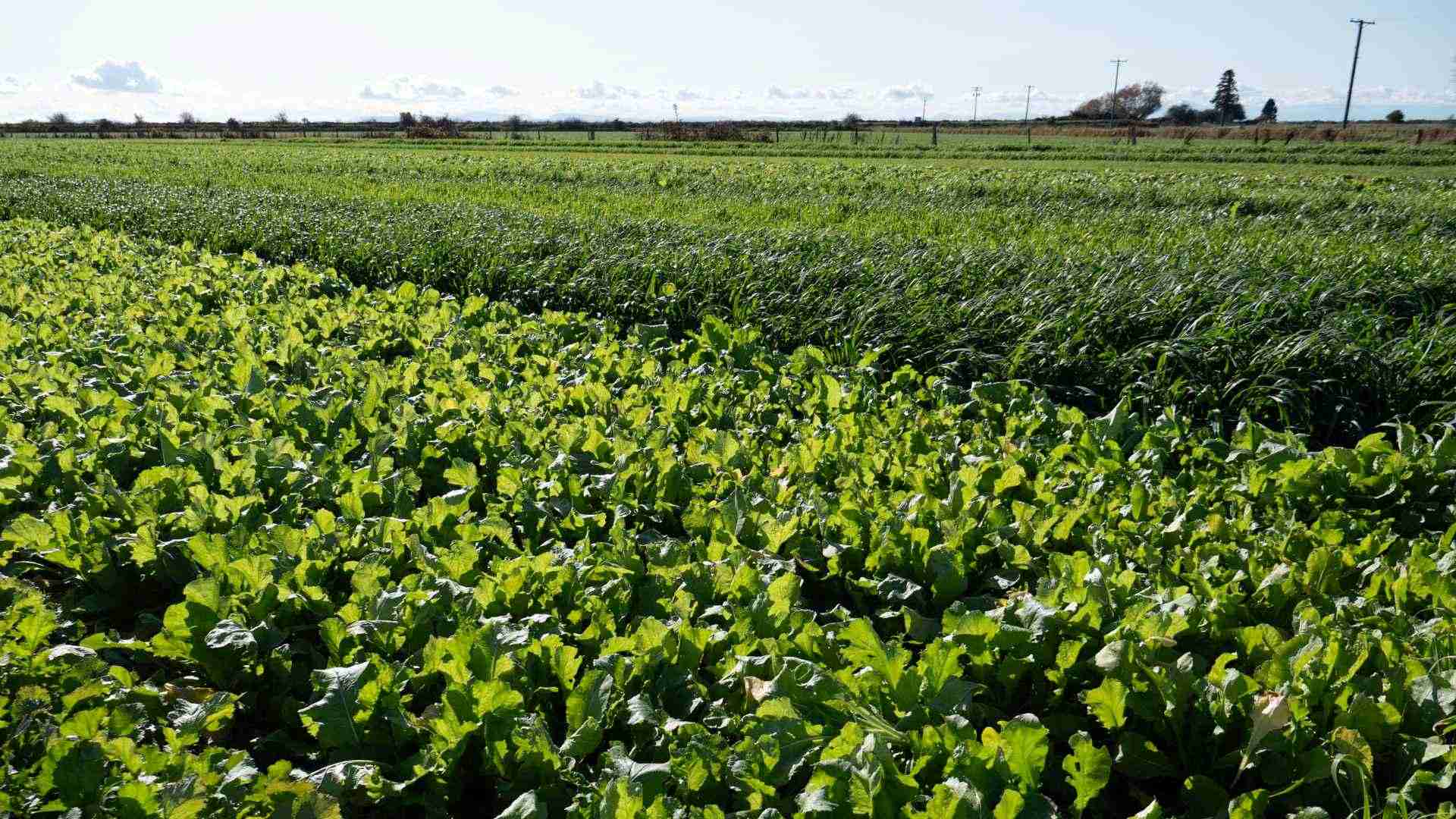 Field Day Recap Field vegetable growers in the Lower Mainland implement cover cropping as a practice to supportsoil and nutrient management objectives, but have outstanding questions about the performance ofspecific varieties against their goals. As supportive research for the BC Living Lab, Delta Farmlandand Wildlife Trust conducted a fall variety trial to assess the characteristics… Read more: Variety Trials for Cover Crops in Vegetables
 - Choosing soil health measurements for large scale adoption
 This is a recording from the BC Living Lab and the BC Agricultural Climate Action Research Network’s Agricultural Research Data Protocol Workshop that took place from February 23 to 24, 2023. This workshop was funded in part by the BC Living Lab and in part by the government of British Columbia’s CleanBC initiative. Funding for… Read more: Choosing soil health measurements for large scale adoption
 - Regenerative soils technical working group draft recommendations
 This is a recording from the BC Living Lab and the BC Agricultural Climate Action Research Network’s Agricultural Research Data Protocol Workshop that took place from February 23 to 24, 2023. This workshop was funded in part by the BC Living Lab and in part by the government of British Columbia’s CleanBC initiative. Funding for… Read more: Regenerative soils technical working group draft recommendations
 - Challenges of scaling soil carbon data over space and time
 This is a recording from the BC Living Lab and the BC Agricultural Climate Action Research Network’s Agricultural Research Data Protocol Workshop that took place from February 23 to 24, 2023. This workshop was funded in part by the BC Living Lab and in part by the government of British Columbia’s CleanBC initiative. Funding for… Read more: Challenges of scaling soil carbon data over space and time
 - Nutrient budgeting and farmgate and soil budget measurement methods
 This is a recording from the BC Living Lab and the BC Agricultural Climate Action Research Network’s Agricultural Research Data Protocol Workshop that took place from February 23 to 24, 2023. This workshop was funded in part by the BC Living Lab and in part by the government of British Columbia’s CleanBC initiative. Funding for… Read more: Nutrient budgeting and farmgate and soil budget measurement methods
 - Soil microbiology analysis options
 This is a recording from the BC Living Lab and the BC Agricultural Climate Action Research Network’s Agricultural Research Data Protocol Workshop that took place from February 23 to 24, 2023. This workshop was funded in part by the BC Living Lab and in part by the government of British Columbia’s CleanBC initiative. Funding for… Read more: Soil microbiology analysis options