
Relay Cropping on Dairy Farms
Dairy Field Day Recap | October 2024
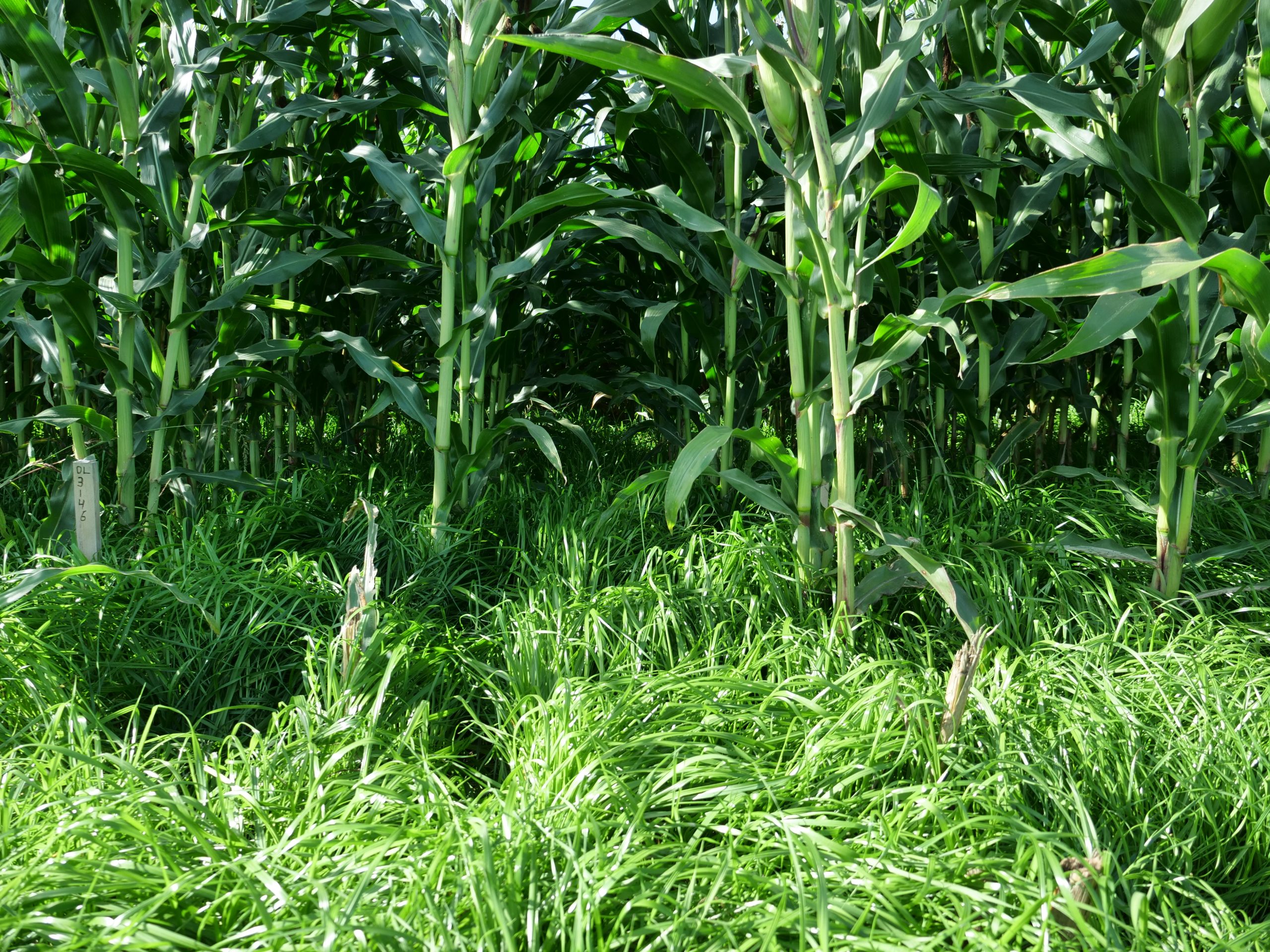
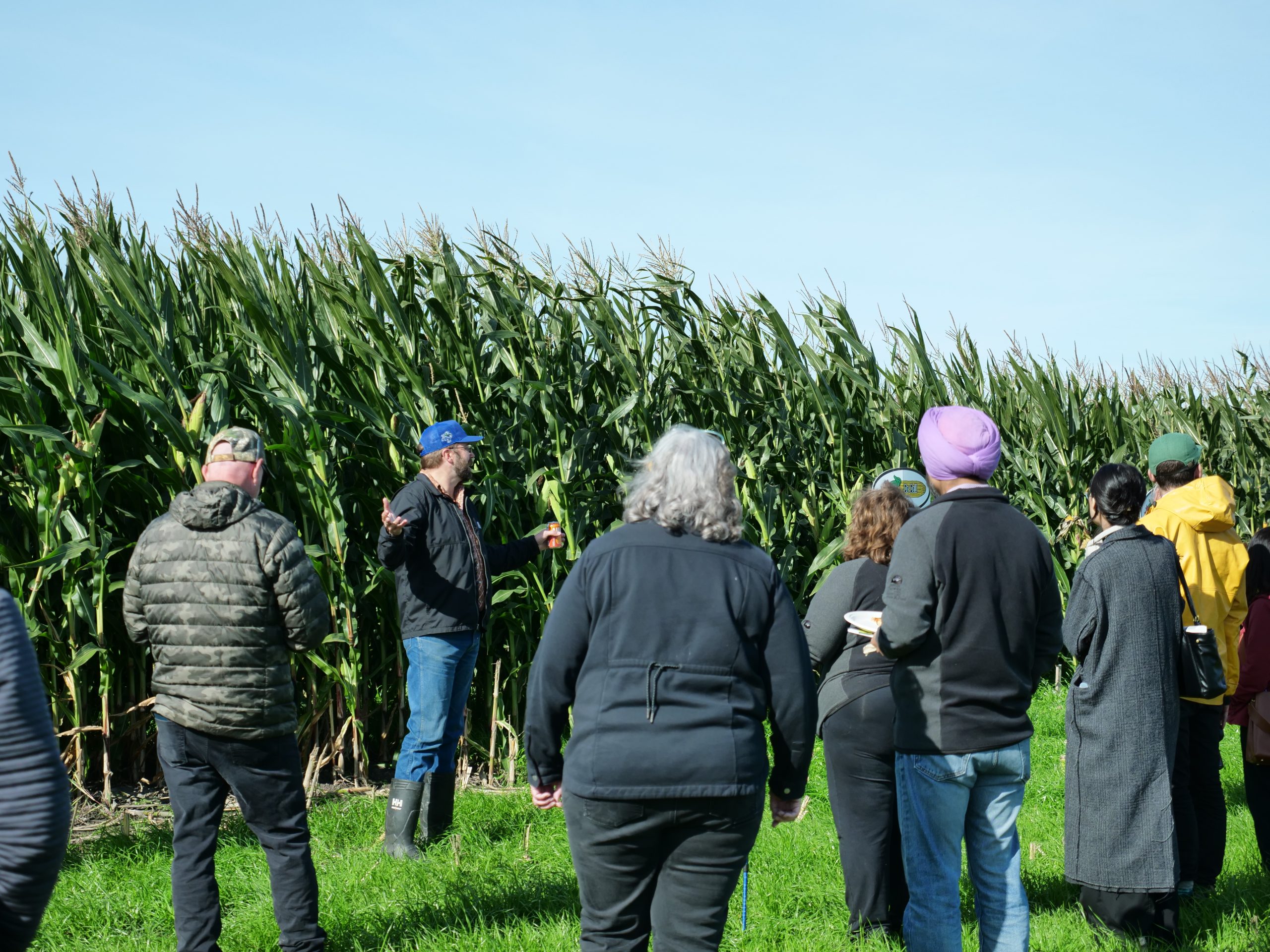
From the Fraser Valley to the North Okanagan, dairy farmers and researchers in the BC Living Lab are working together. They’re testing how on-farm practices that can help store carbon and reduce emissions – like relay and cover cropping, low-emissions manure spreading, and refined nutrient budgeting – can also work for the farm. At a sunny field day in Abbotsford, farmers and industry experts showed off a thriving summer-seeded relay crop in silage corn –showing its potential as a spring forage crop that can have benefits for cows and the climate.
Not Just a Head Start
When thinking about spring forage and soil management, project partners encouraged farmers to consider how a relay crop aligns with their goals. Seeding Italian ryegrass into silage corn when it’s at the 4 to 6-leaf stage gives the ryegrass a head start compared to a cover crop or cereal forage planted after harvest. With strong establishment before winter, Italian ryegrass has the potential to yield a spring forage crop (up to 2 tons/acre or more, depending on location) to ensile.
Industry expert on the project, Mike Witt, shared other benefits to consider:
- Italian ryegrass can support herd performance: As one of the most digestible forages, ryegrass can have an advantage compared to fall cereals. Diets built around digestible fiber instead of starch can also increase milk’s butterfat content.
- Less cultivation work, bigger climate impact: Relay cropping in summer saves farmers from putting in a crop after corn harvest. The reduced soil disturbance also supports soil health and climate goals.
- Improved nutrient uptake and retention: An established ryegrass crop can better absorb nutrients from fall manure than a fall-seeded crop can. By holding nitrate over winter, less can enter and impact nearby water and ecosystems.
In-Field Insights
At the farm toured on the field day, growers got a chance to see how well the Italian ryegrass can persist in the shade of the corn followed by its quick growth in areas the corn had been harvested. Management of the system in this operation integrated the following approaches:

Growing Pains, Getting Established
- Timing of seeding can be a challenge – variable weather can impact seeding dates and crop establishment, and there can be small margins of error for consistent crop performance.
- Equipment may not be available – a specialized inter-seeder or seed drill modified to fit between the corn rows are used to plant relay crops, but aren’t yet widespread in dairy.
- Perceptions of risk vs. rewards – a lot of dairy farms can’t afford the risks of the trial and error that can be needed to make relay crop performance consistent on their farm.
What’s Up Next?
The BC Living Lab’s collaborative approach emphasizes the value of trialing, observing, and adapting practices to fit each farm’s goals and conditions. While trialing on active farms, researchers and growers continue to assess what conditions make relay cropping work vs. work at their best. Data collection on the performance of relay cropping, low-emissions manure spreading, and refined nutrient budgets for carbon storage and reduced emissions is ongoing. Equally important — the project is evaluating the economic and productivity costs of putting them into practice.
This field day took place on the traditional and unceded territory of the Stó꞉lō people, the Sumas first nations and Matsqui.


