
Cover Cropping in Hazelnut Orchards
Field Day Recap | 2024
In hazelnut orchards across the Fraser Valley, growers and researchers in the BC Living Lab are testing a big question: Can alleyway cover crops and refined nitrogen management help mitigate climate change and support orchard production goals? The 5-year collaborative project is trialing these practices and adjusting them in real-time to explore potential benefits for growers and the climate. At the BC Hazelnut Growers’ Association annual summer field day, participating growers shared the successes and challenges of their research trials.
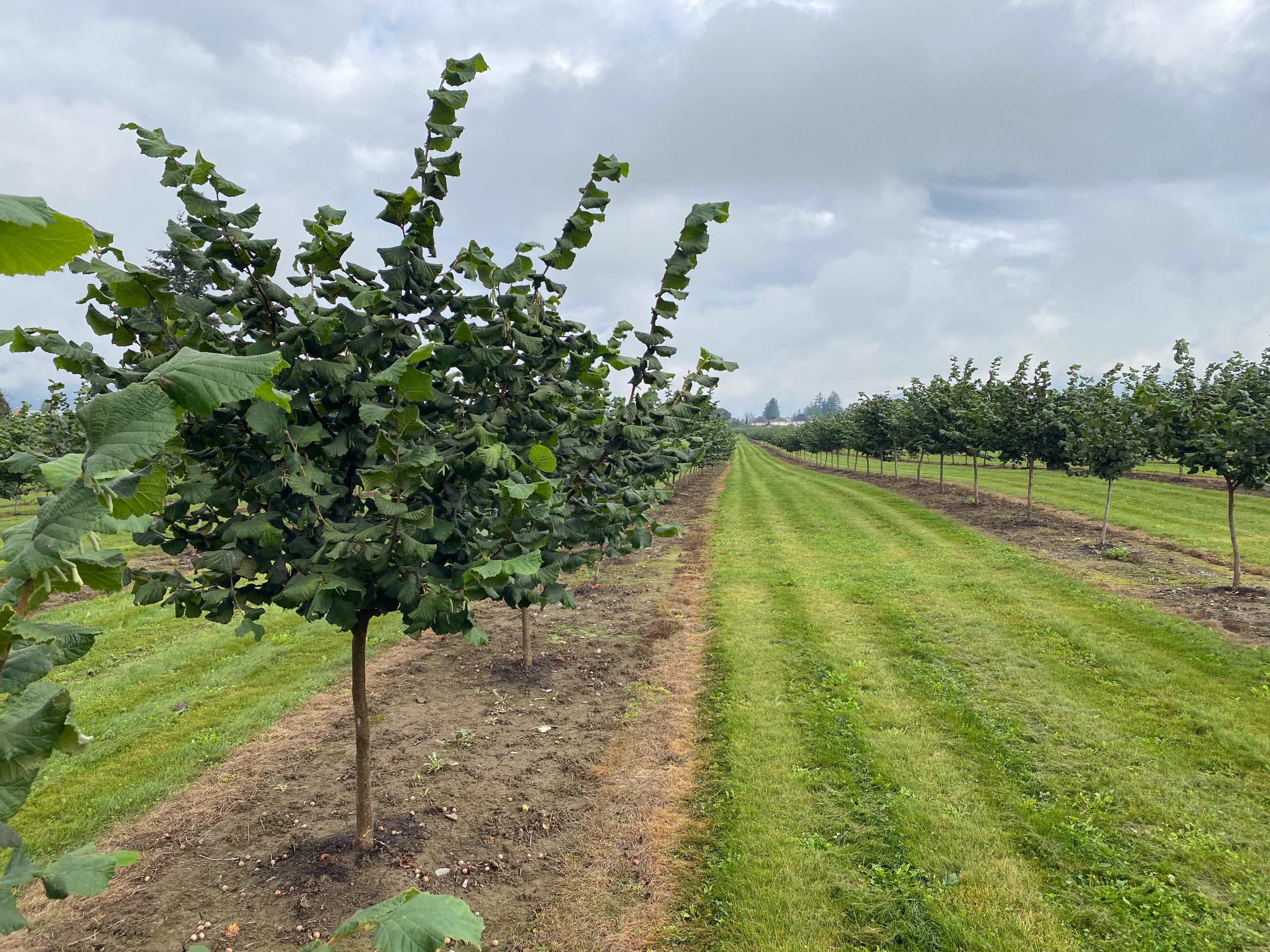
Tweaking Practices to Maximize Impact
Some hazelnut producing regions to the south are dominated by bare soil in alleyways, but most BC hazelnut orchards are ahead of the game by having perennial grass cover between tree rows. This plant cover can help reduce erosion, hold carbon in the soil, reduce compaction, and suppress weeds. But with alleyways making up a large area of the farm, tweaks in practices could have a big impact on the production and climate goals of the farm. Trials in the BC Living Lab are investigating just this. Planting perennial cover crops in alleyways and refining nitrogen application has the potential to maximize benefits and add others:
- Cover crops like clover could provide nitrogen and hold more carbon in soil than existing grass. This trial is using perennial grass and clover mix, which has been shown to hold more carbon, and for longer, than grass.
- Fertigation could support water use efficiency, fertilizer and water quality goals: Many farms already use drip irrigation, so are able to trial fertigating with N.
Exploring ‘Co-Benefits’
Producers at the field day also raised questions about how these practices measure up to support environmental goals or ‘co-benefits’ for protecting water quality and biodiversity. In general, cover crops are an effective practice to absorb excess soil nitrate, which can stop it from leaching into ecosystems and impacting water quality, while also supporting insect and pollinator diversity.
Although the BC Living Lab program focuses on carbon storage and emissions reductions, its co-development approach also prioritizes outcomes like yield that are most relevant growers. For hazelnuts, researchers are working with the extra challenge of measuring the impact of a practice change over the trees’ bearing/non-bearing year cycle – because of this it can take more years to confirm changes in yield and tree health compared to other crops.
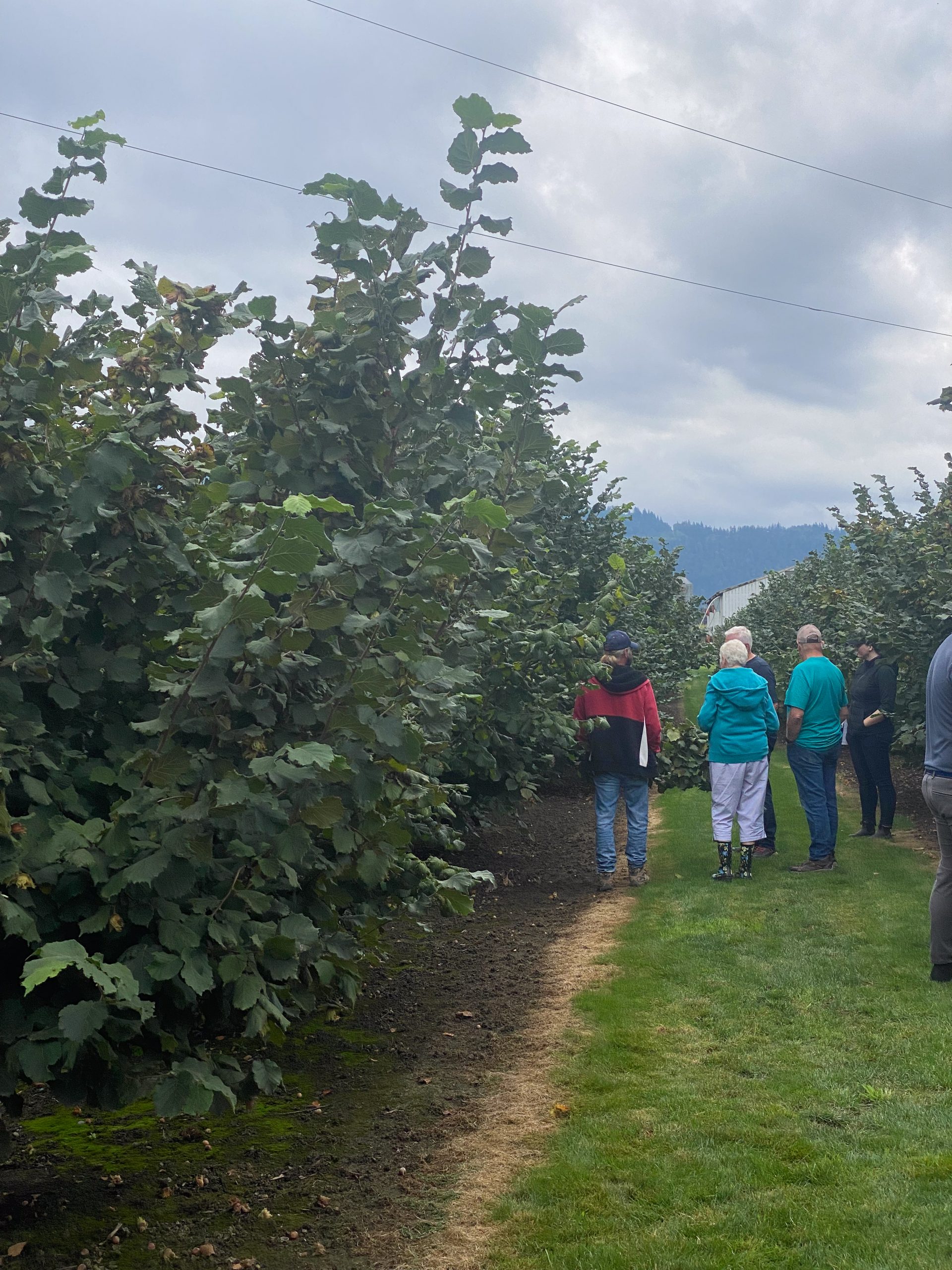
Growing Pains, Getting Established
- Cover crops need frequent mowing: Growers reported mowing every two weeks, and once a week when rain sped up growth.
- Orchard floor may need extra preparation: Cover crops need to be short enough for hazelnuts to be collected at harvest.
- Equipment can be a barrier: Seeding equipment for putting in cover crops may not be available, and can be further limited by canopy different architecture.
- Not all biodiversity is desirable: Pests like gophers and other rodents can increase in cover cropped areas, but frequent mowing can help control them.
What’s Up Next?
The BC Living Lab’s collaborative approach emphasizes the value of trialing, observing, and adapting practices to fit each farm’s goals and conditions. Researchers are continuing to work with growers to trial feasibility on active farms and assess how alleyway cover cropping and refined nitrogen management impact climate mitigation, agronomic practices, and farm economics. Over the remaining years of the project, findings and insights will be shared with the wider grower community.
This field day was held on the traditional, ancestral and unceded of the Stó:lō Coast Salish peoples.


