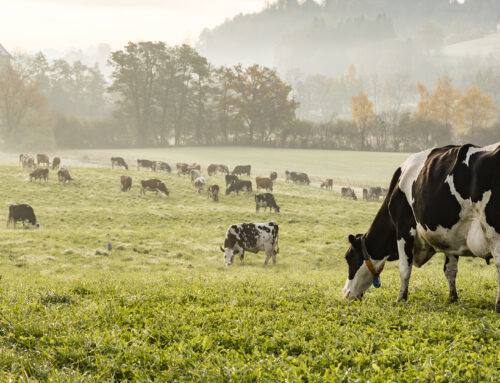
Extended Grazing on BC Cattle Ranches
Cattle & Forage Field Day Recap | September 2024
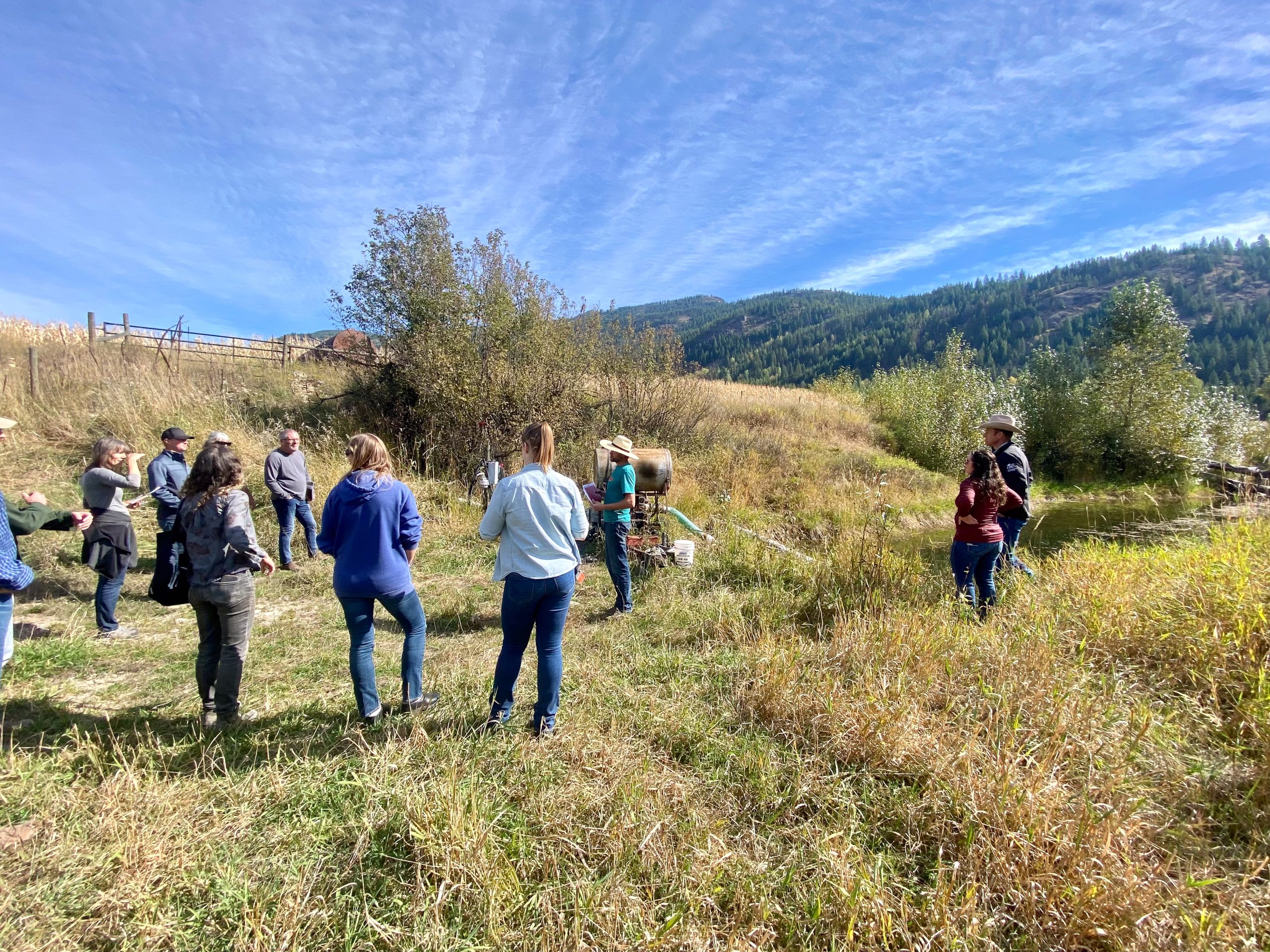
On ranches spanning the Interior from Grand Forks to Prince George, producers and researchers are exploring: How can corn and multi-species cover crops extend fall grazing while reducing labour, equipment use, and emissions? A field day at the southernmost trial ranch in the BC Living Lab brought ranchers and researchers together to explore innovative approaches to this question. By shifting from mechanical harvesting to standing corn grazing, the host demonstrated how moving cattle now takes about an hour every three days instead of daily tractor work.
Layering Innovation and Ingenuity
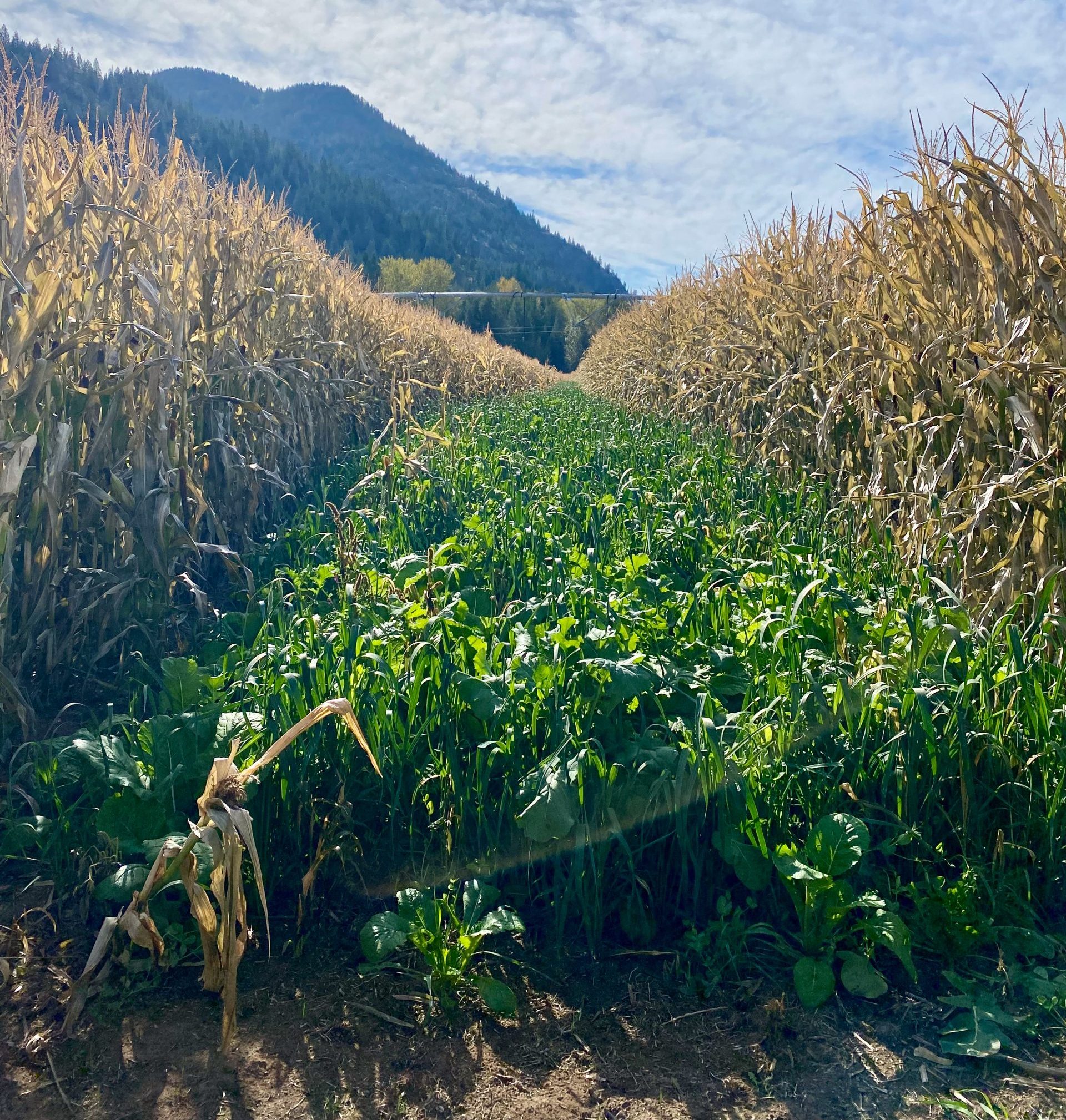
Extending the grazing season into late fall helps ranchers offset rising winter feeding costs, which are increasingly unpredictable due to extreme climate events. Grazing standing corn allows cows to handle harvesting, processing, and storage—provided it’s a high heat unit variety that doesn’t mature and become starchy. At this field day, the host rancher demonstrated how layering two acres of corn around a central pivot, a grid of multi-species cover crop corridors, and a rotational grazing plan has transformed an off-grid field to support 220 cows for 3 days – with less work and less emissions. Standout insights included:
- Efficient grazing management = cows do the work: Rotationally grazing standing corn reduces labor and fuel costs compared to tractor feeding. Post-grazing stubble can be lightly disced or trampled before reseeding.
- Cover crop corridors are multipurpose: The grid creates space for fencing and make it easy to move, while providing benefits like soil organic matter and extra nutrition for cattle.
- Corn variety matters: Higher heat unit corn yields more forage, while lower heat unit varieties produce starchy cobs that can cause acidosis. Timing grazing and providing hay on the last day of rotation helps manage this risk.
In-Field Insights
The site was irrigated for 90 hours per week using a diesel-powered pivot, requiring about 4 litersof fuel per hour. The field trial’s cost was estimated at $2.17 per cow, factoring in carrying costs.

Growing Pains, Getting Established
- Winter water supply: With no electricity on- site, keeping water from freezing in late fall is a major challenge. Nose-pumps, geothermal, or solar pumps are being explored.
- Corn maturity, yield, and grazing timing: Finding the balance between forage yield, forage quality, and preventing acidosis are continuous experiments.
- Pest pressures big and small: Wireworm is abundant in fields recently in sod – this field required a second corn planting because of wireworm damage. Deer did little damage to the cover crop, but did seek out the soybeans.
What’s Up Next?
The BC Living Lab’s collaborative approach emphasizes the value of trialing, observing, and adapting practices to fit each farm’s goals and conditions. Researchers are continuing to work with growers to trial feasibility on active farms and assess how practices impact climate mitigation and farm economics. On this trial ranch, the goal is to graze 250 cows for 52 days on 36 acres—equivalent to375 cows per acre per day. With support from the BC Living Lab, trials like this lower the financial risk of adopting new practices while offering key insights into extended grazing and emissions reductions.
This field day took place on the traditional and unceded territory of the Syilx people and Ktunaxa Nation.